

Microdosing GLP-1
Microdosing GLP-1 therapy refers to the use of very low, carefully adjusted doses that fall well below standard weight loss protocols. This approach is not about pushing the scale down as fast as possible. It is about precision and responsiveness.
Typically patients that are good candidates for microdosing are:
-Near normal BMI
-Not looking for extreme weight loss

Medical Criteria for GLP-1 Microdosing
Microdosing GLP-1 therapy is reserved for select individuals and follows different criteria than standard weight loss dosing. Because the doses used are significantly lower, eligibility is based more on clinical context than on weight alone.
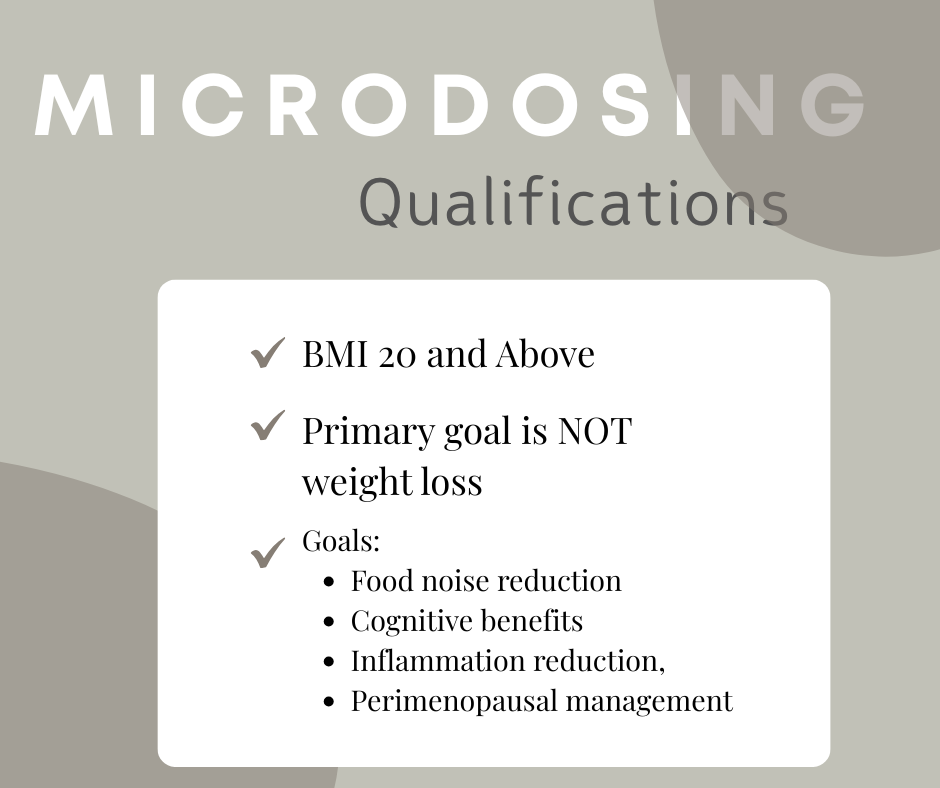
In most cases, medical criteria to consider microdosing includes:
A BMI of 20 or higher
Presence of metabolic symptoms such as insulin resistance, inflammation, or appetite dysregulation
Perimenopause-related changes impacting weight distribution, energy, or hunger cues
A history of sensitivity to medications where standard dosing may not be appropriate
Microdosing is not intended for cosmetic weight loss or rapid results.
Belle

GLP1s: Tirzepatide
Injectable
Price:
Tirzepatide- $99/month - 3 month supply
Discounts:
Code: BELLE15 for 15% off your first order
Perks:
These are very low dose and the main goal of microdosing is not usually weight loss
Klarna/Affirm available for payment
Microdosing is highly customizable- but in general there are 2 pathway-
Patients new to GLP1s- Start 2mg weekly and move up as tolerated
Patient already on GLP1s (5mg weekly or less) move down to 4mg then 3mg as tolerated.
Patients that are currently on more than 5mg weekly of tirzepatide are generally not great candidates for microdosing.
Emerging Research: Conditions Being Studied With GLP-1 Therapy
GLP-1 therapy is best known for metabolic health and weight management, but research is expanding. Scientists are currently studying whether GLP-1 medications may play a supportive role in other conditions where inflammation, insulin signaling, and immune regulation may be involved.
Important note: These uses are investigational. They are not FDA approved indications, and they are not considered standard treatment. When I mention them, it is to share what is being explored in the medical community, not to promise outcomes.
Areas of active research and clinical interest include:
Post-viral syndromes, including Long COVID, especially symptoms like fatigue, brain fog, and persistent inflammation
Chronic fatigue and energy regulation issues (often discussed in the context of post-viral illness)
Chronic pain and inflammatory overlap conditions, such as fibromyalgia-like symptom clusters (still early and not definitive)
Inflammatory skin conditions where metabolic dysfunction and inflammation overlap (examples include hidradenitis suppurativa and psoriasis)
Brain health and neuroinflammation, including early research in cognitive and neurodegenerative conditions
Broader inflammation-related metabolic dysfunction, where low-dose approaches are being explored in select settings
Why this matters
The goal of discussing this research is to help people understand that metabolic health impacts more than weight. For some individuals, clinicians may consider a low and slow, individualized approach when the goal is symptom support, tolerance, or maintenance, not rapid weight loss.
A responsible takeaway
If you are dealing with any of the conditions above, GLP-1 therapy should never replace appropriate evaluation and evidence-based treatment. If microdosing is considered, it should be done with careful screening, clear goals, and ongoing monitoring.
Common Questions About Microdosing
Is microdosing just a lower dose for weight loss?
No. It uses small, customized doses focused on metabolic support rather than maximum weight loss.
Who is it a good fit for?
People who want metabolic support or help with maintenance, or who don’t tolerate standard doses well.
Educational content only. This is not medical advice and not a promise of results.
Further reading: What Does “Microdosing” Mean When We Talk About GLP-1s?